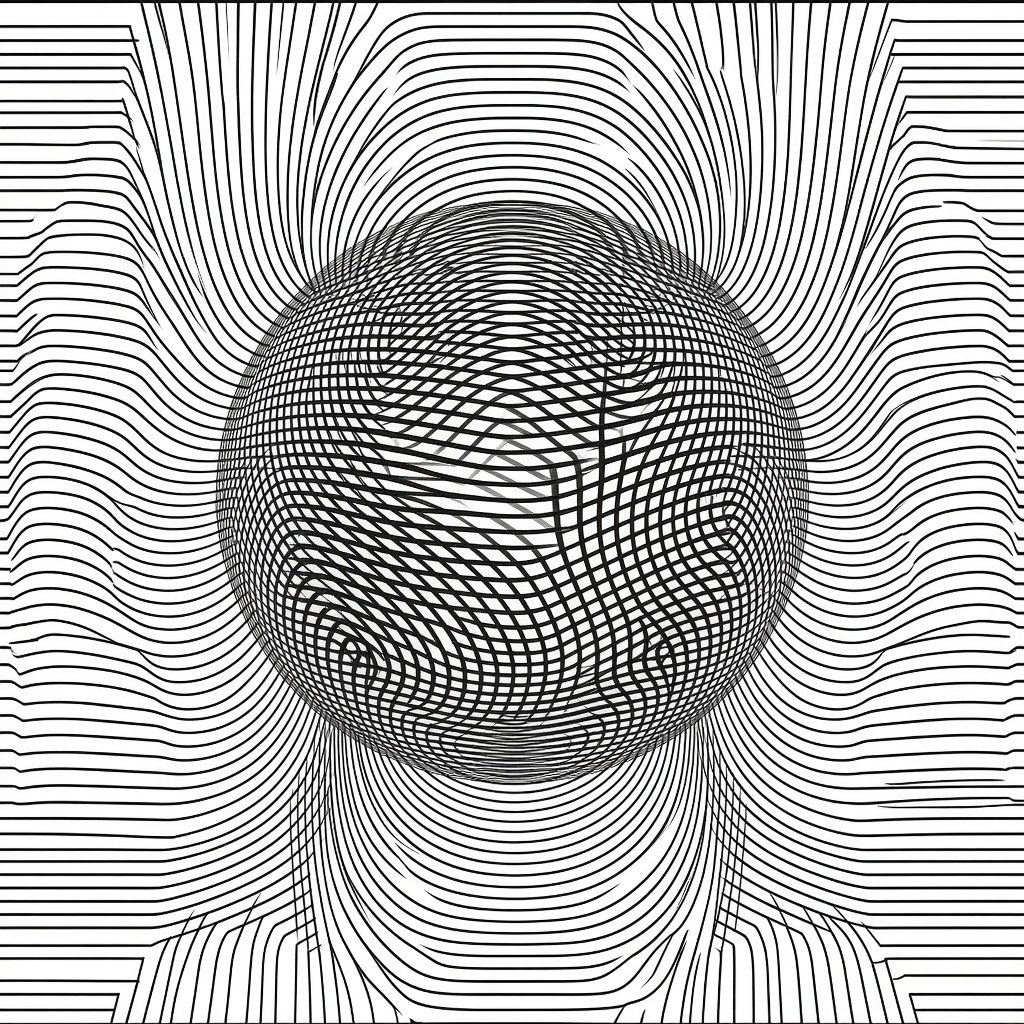
3D, motion & generative1960–presentHungary, France, United States, Germany
Generative & Creative Coding
Art and design made by rules and algorithms, from Vera Molnár's plotter drawings to Processing, p5.js and shaders. Systems produce endless variations.
Draft entry
History
Art and design made by rules and algorithms, from Vera Molnár's plotter drawings to Processing, p5.js and shaders. Systems produce endless variations.
A longer history of this style is being written. Until then, the context below shows where it sits.
- Period
- 1960–present · Modernism goes global, Postmodernism and the desktop, Early web and Y2K, Flat, mobile and social, Post-flat, glass and generative
- Where
- Hungary, France, United States, Germany
- Grew from
- Kinetic Typography & Title Design
- Led to / sits beside
- Op Art, Glitch Art, Variable & Fluid Type
How to recognise it 5 traits
- 01algorithmic patterns
- 02rule-based variation
- 03flow fields and particles
- 04plotter line work
- 05emergent complexity
Vocabulary
Palette Click a swatch to copy
An indicative palette for study, not a historical colour standard.
Typefaces
- Mono fontsFonts In Use ↗
Typefaces shown by name only. Specimens are set in this site's fonts, so check licensing with the foundry before use.
Images & sources 0 images · 5 links
We only show images that are public domain, openly licensed or clearly labelled AI-generated examples. For this style, explore the works at their source.
Slot reserved for a labelled AI-generated example made with the prompt below.
Key designers 5
- Vera Molnár1924–2023 · Hungary, France · early computer and plotter art
- Manfred Mohrb. 1938 · Germany, United States · algorithmic hypercube works
- Casey ReasUnited States · co-created Processing
- Zach LiebermanUnited States · openFrameworks co-creator; School for Poetic Computation
- Tyler HobbsUnited States · Fidenza; flow-field generative art
Prompts Image · UI · Typography · Search
For image models. Edit the subject, then copy.
A looping title card for a design podcast, generative art, thousands of fine lines following a Perlin noise flow field, plotter-pen aesthetic, black ink on off-white with one coral accent. Colour palette #0B0B0B, #F2F2F2, #FF5F5F, #3D5A80. Avoid: figurative subject, hand-painted texture.
For UI and website generators.
Design an animated hero section for a design podcast with a Generative & Creative Coding-inspired visual language: algorithmic patterns; rule-based variation; flow fields and particles; plotter line work; emergent complexity. Type: Mono fonts. Palette: #0B0B0B, #F2F2F2, #FF5F5F, #3D5A80. Keep it usable: clear hierarchy, accessible contrast (WCAG AA), real content. Avoid: figurative subject, hand-painted texture.
For lettering and type experiments.
Set the headline 'Form follows feeling' in the spirit of Generative & Creative Coding: algorithmic patterns, rule-based variation, flow fields and particles. Suggested type: Mono fonts.
Queries for museums, archives and inspiration sites.
- Generative posterAre.na ↗Cooper Hewitt ↗
- Generative graphic designAre.na ↗Cooper Hewitt ↗
- Generative typographyAre.na ↗Cooper Hewitt ↗
- algorithm designAre.na ↗Cooper Hewitt ↗
- flow field designAre.na ↗Cooper Hewitt ↗
Describe the visual traits. Don't name living artists or designers, and don't ask to copy a specific work. Avoid: figurative subject, hand-painted texture.