Collection12 itemsDraft

The square, the grid and the red wedge

From Malevich's Black Square to the Swiss grid: how a few basic shapes became the foundation of modern layout.

Zero point

In 1915 Kazimir Malevich hung a black square in the corner of a room, the place where an icon would usually go. It declared that painting could be pure form. Within five years designers were using the same squares, circles and bars to sell revolutions, chairs and exhibitions.
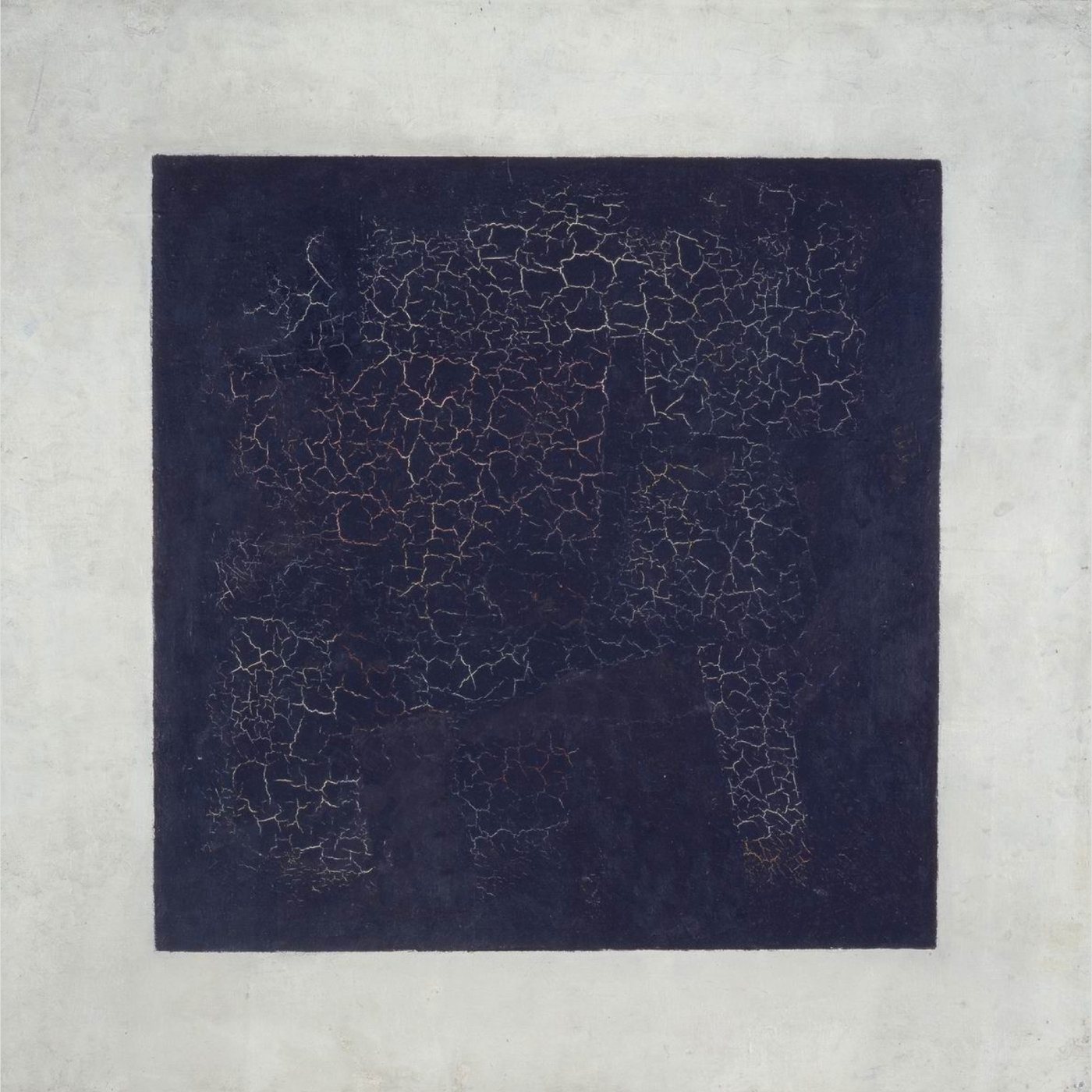
Black Suprematic Square, Kazimir Malevich, 1915Public domain
Black Suprematic Square, Kazimir Malevich, 1915Public domain · Wikimedia Commons (opens in new tab) ↗
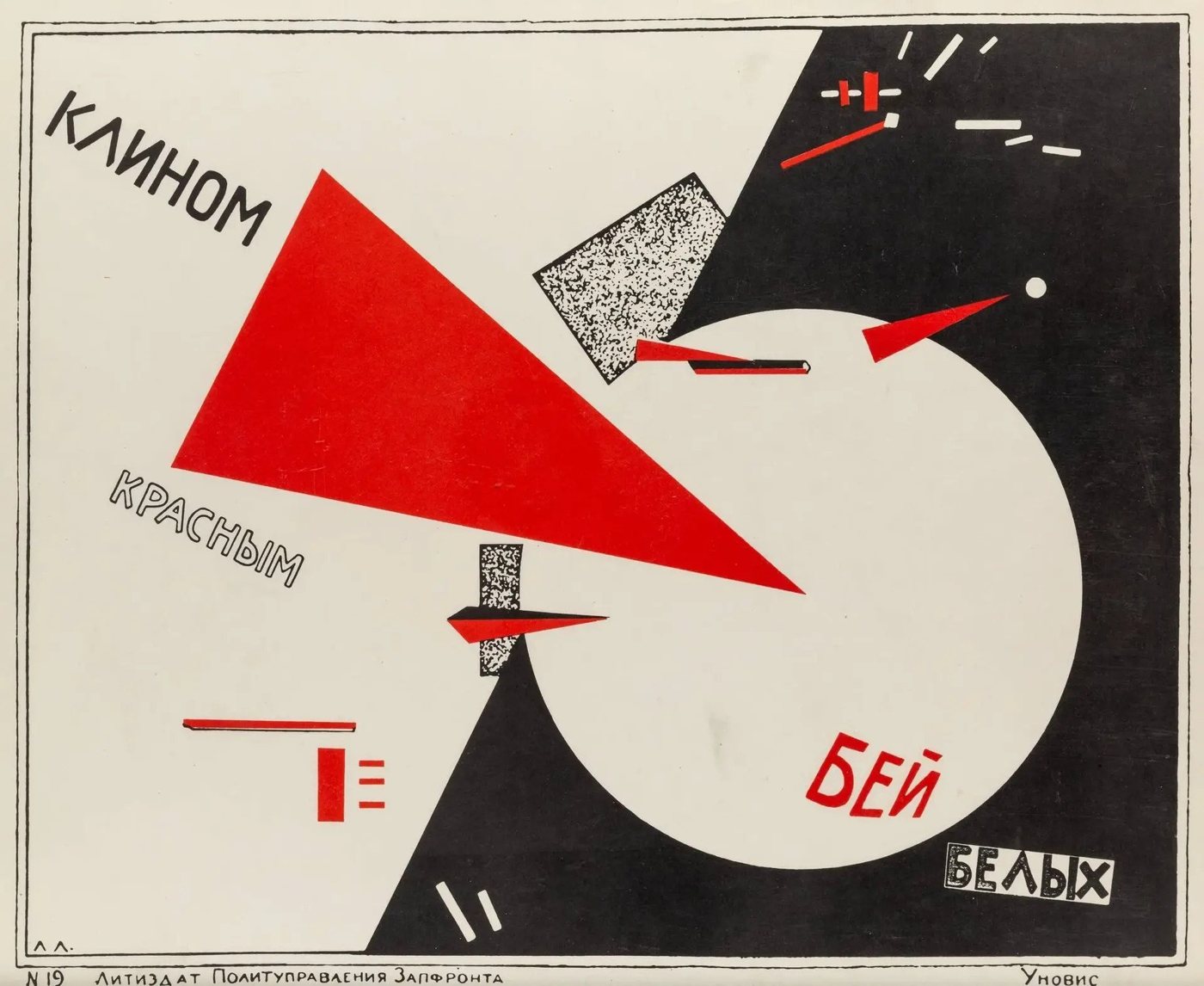
Beat the Whites with the Red Wedge, El Lissitzky, 1919Public domain
Beat the Whites with the Red Wedge, El Lissitzky, 1919Public domain · Wikimedia Commons (opens in new tab) ↗

Geometry with a message

El Lissitzky's 1919 poster turns a civil war into a diagram. The red wedge pierces the white circle. The diagonal does the shouting.
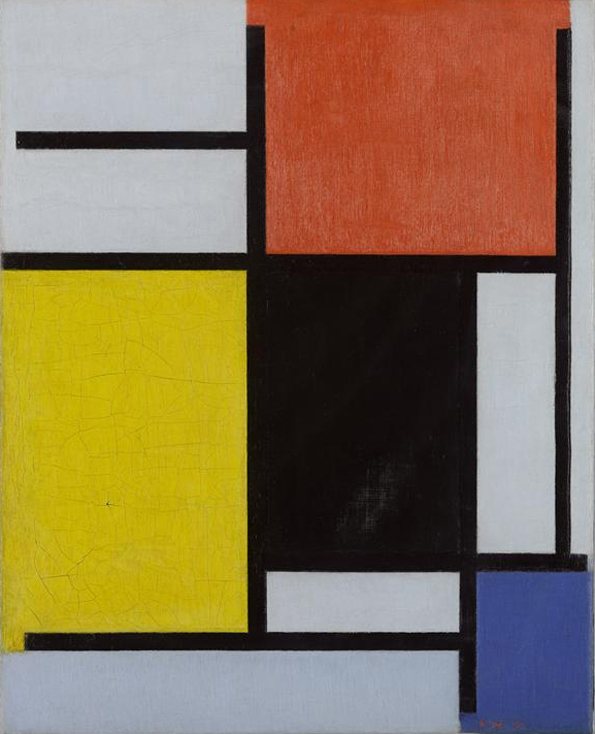
Composition with Red, Yellow, Black, Blue and Grey, Piet Mondrian, 1921Public domain
Composition with Red, Yellow, Black, Blue and Grey, Piet Mondrian, 1921Public domain · Wikimedia Commons (opens in new tab) ↗
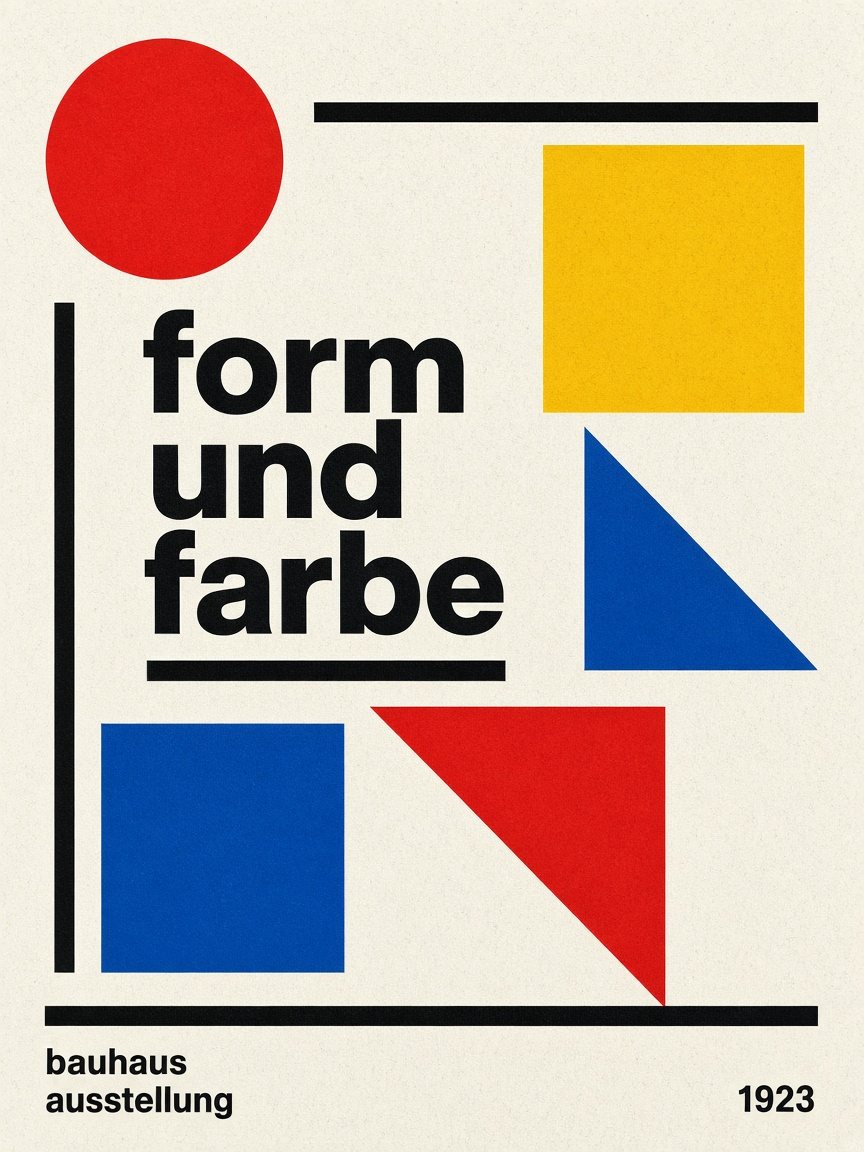
AI-generated example: An exhibition poster built from a circle, squares and triangles in primary colours, with lowercase typeAI-generated example
An exhibition poster built from a circle, squares and triangles in primary colours, with lowercase typeAI-generated example, not a historical artefact.

From composition to system

The Bauhaus taught these elementary forms to every student. After the war, Swiss designers made a system of them: a modular grid, one typeface family, objective photography. It's the ancestor of every layout grid in Figma.
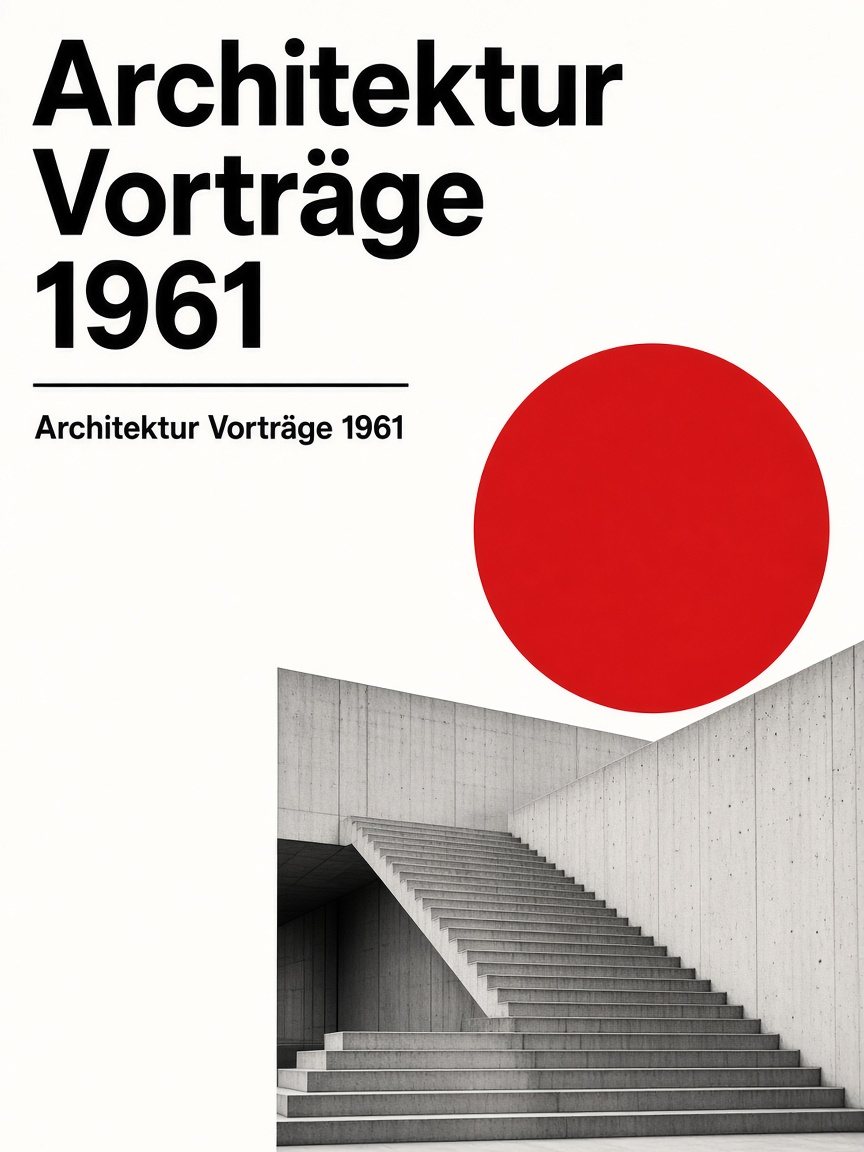
AI-generated example: A lecture-series poster on a strict grid, with one red circle and a black-and-white photographAI-generated example
A lecture-series poster on a strict grid, with one red circle and a black-and-white photographAI-generated example, not a historical artefact.
Museum für Gestaltung ZüricheMuseum poster collectionSwiss posters, linked at the source (most are still in copyright)View at source ↗

Images are public domain or CC0 with credits, or clearly labelled AI-generated examples. Everything else links to the source. Image policy

More collections

All →